
Leading the change: optimization and sustainability in maritime transport.
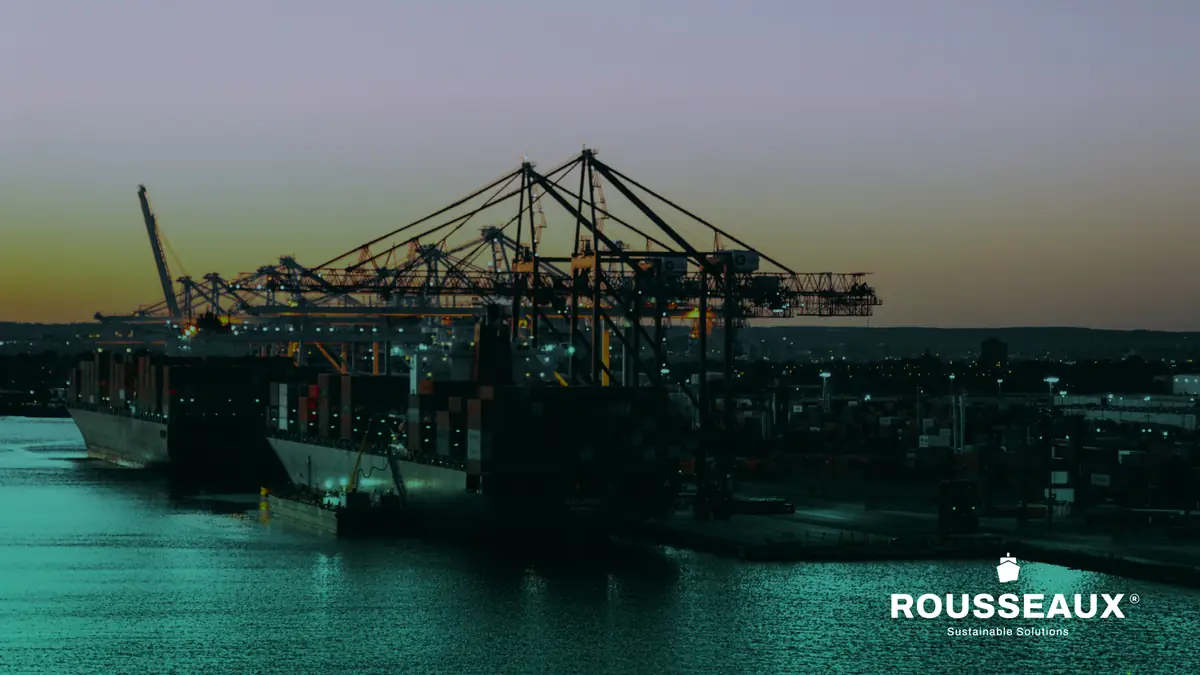
At ROUSSEAUX we are Innovation in the Maritime Industry. We offer services that not only improve operational efficiency but also promote environmental sustainability. Our commitment to the environment and to optimizing maritime transport is reflected in three key areas: operational optimization of maritime transport, reducing the carbon footprint of maritime transport, and measuring and managing the carbon footprint of maritime cargo.
Operational optimization of maritime transport
Operational efficiency is fundamental to success in the maritime industry. At ROUSSEAUX, we offer integrated solutions to optimize operations, ensuring that every ship runs efficiently and safely. Our experience includes:
- Route and operations analysis: We use advanced data analysis tools to assess and optimize navigation routes, reducing fuel consumption and improving transit times.
- Monitoring and control systems: We implement real-time monitoring systems that allow constant supervision of key operating parameters, ensuring ships operate within optimal limits.
- Training and development: We offer training programs for onboard and shore staff, making sure they have the skills and knowledge needed to operate efficiently and sustainably.
Reducing the carbon footprint of maritime transport
The shipping industry is one of the main emitters of greenhouse gases. At ROUSSEAUX, we are dedicated to reducing our clients' carbon footprint through several initiatives:
- Clean propulsion technologies: We encourage the use of advanced, clean propulsion technologies, such as low-consumption engines and alternative energy systems, to lower CO2 emissions.
- Fuel consumption optimization: We apply fuel consumption optimization techniques, such as speed adjustment and improved engine efficiency, to reduce emissions.
- Carbon management plans: We develop customized carbon management plans that help shipping companies monitor, report and reduce their emissions effectively.
Carbon footprint of maritime cargo
Besides the carbon footprint of ships, it is also crucial to consider the carbon footprint of the cargo they carry. At ROUSSEAUX, we offer specialized services to manage and reduce the carbon footprint of the cargo a ship moves:
- Life-cycle assessment: We carry out detailed life-cycle assessments of cargo to identify emission reduction opportunities at every stage of transport.
- Sustainable packaging strategies: We propose sustainable packaging strategies that minimize material use and reduce environmental impact.
- Transparency and reporting: We support supply chain transparency through reporting systems that track and document the carbon footprint of cargo, enabling companies to comply with regulations and improve their environmental performance.
Commitment to sustainability
ROUSSEAUX is committed to leading the transformation toward a more sustainable maritime industry. We understand that operational optimization, carbon footprint reduction and efficient cargo management are essential for a greener future. As an industry leader, we are equipped to help shipping companies implement innovative, sustainable solutions that not only meet international regulations but also promote a positive impact on the environment.
We believe that sustainability and operational efficiency are not mutually exclusive but must go hand in hand to achieve a more prosperous and environmentally respectful future. Our services are a testament to our commitment to innovation and sustainability in the industry.
"At ROUSSEAUX, we are committed to leading the transformation toward more efficient and sustainable maritime transport. Our mission is not only to optimize operations and reduce carbon footprint but also to inspire the whole industry to adopt practices that protect our planet for future generations." - Martín Rousseaux, CEO of ROUSSEAUX.
Article published on June 24, 2024. The regulations mentioned may have changed since then.